How to Polish Stainless Steel to a Mirror Finish Guide
Home > News > How to Polish Stainless Steel to a Mirror Finish Guide
How to Polish Stainless Steel to a Mirror Finish ?
Ever wonder why some metal polishing jobs end up looking like a blurry funhouse mirror instead of a pristine, flawless surface? Before we even pick up a sanding pad, we need to look at the metal itself. If you want to know exactly how to polish stainless steel to a mirror finish, you must first understand the exact steel grade in front of you. Not all alloys polish the same way.
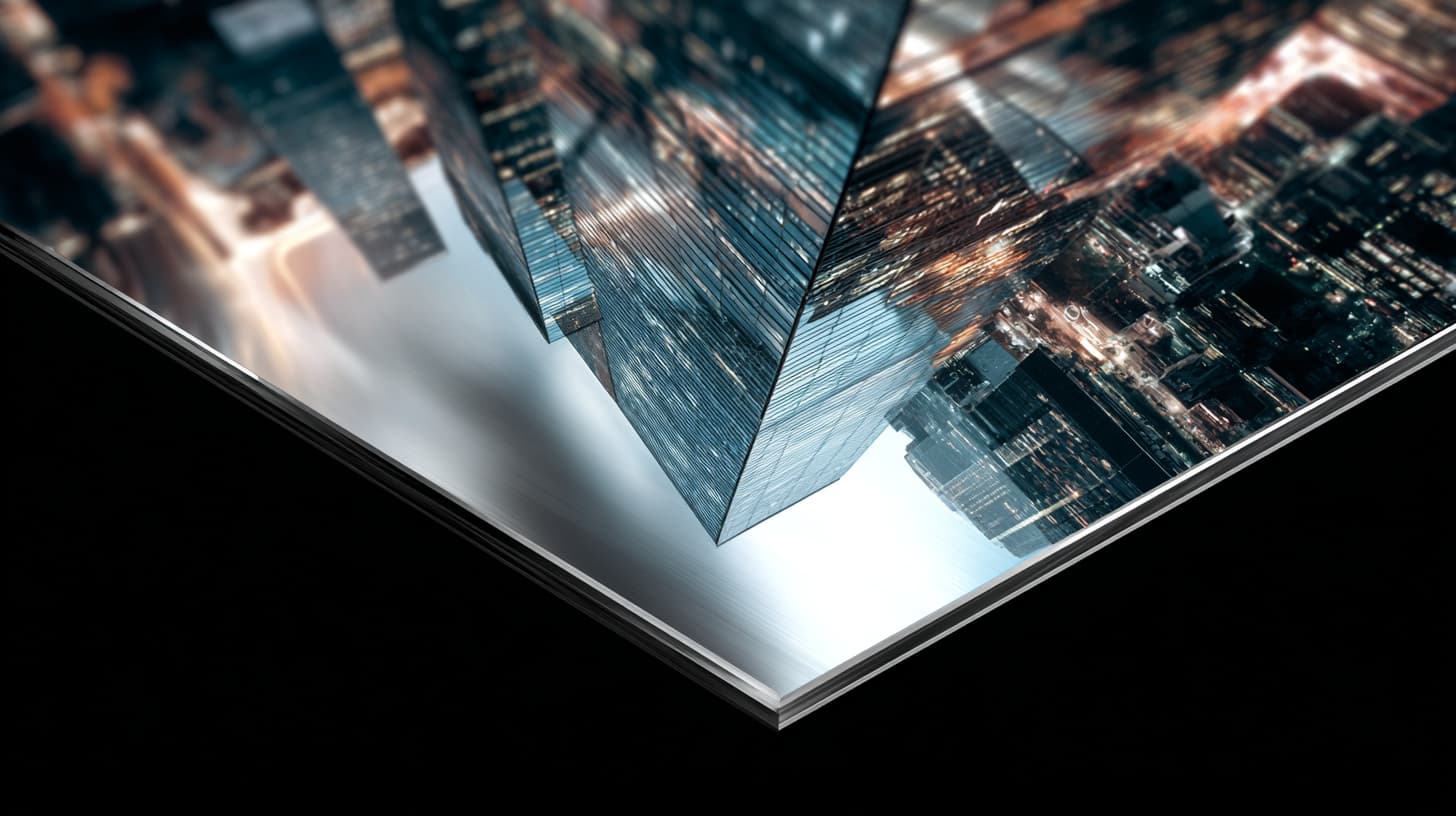
Premium 8K mirror finish stainless steel sheet from Xinye Steel – brilliant reflection and superior corrosion resistance.
Know Your Stainless Steel Grades
The material composition of your steel heavily dictates your mirror polish process. Here are the most common grades we deal with on the shop floor:
304 Stainless: The daily workhorse. It is relatively forgiving and the easiest to bring up to a bright, clean shine.
316 Stainless: Often called marine grade. Achieving a corrosion-resistant metal finish here requires more effort because the added molybdenum makes the metal significantly harder.
904L Stainless: A premium, high-alloy steel often used in luxury goods. It yields a breathtaking shine but demands absolute perfection in your technique.
Mirror Finish Standards
In the commercial metal industry, “mirror” is not just an adjective—it is a tightly controlled, measurable standard. We measure this reflectivity in “K” levels:
Finish Level
Polish Quality
Common Uses
8K
The standard #8 mirror finish. Highly reflective with excellent clarity.
Decorative trim, architectural panels.
10K
Ultra-clear reflection with virtually zero visible directional grain.
Here is a hard truth I always stress to my team: higher-grade steels require precise temperature and pressure control. If you push too hard or generate too much heat while polishing, the metal’s surface will distort, creating a wavy, dimpled texture known as “orange peel.” Once that happens, your perfect 8K mirror stainless sheet is ruined. Flawless stainless steel surface preparation and strict heat management are non-negotiable for a true, flat mirror shine.
Essential Tools for How to Polish Stainless Steel to a Mirror Finish
Before starting the mirror polish process, you need the right setup. Having the correct tools makes the difference between a dull surface and a flawless reflection. Here is the toolkit I rely on for professional stainless polishing.
1. Core Abrasives and Sanding Grits
Getting the surface smooth requires a steady progression of abrasives. Skipping steps here will leave deep scratches that buffing cannot fix.
Progressive Sandpaper: You will need a full range of sanding grits for stainless steel, starting coarse (around 120-grit) and moving up to ultra-fine (1500 to 2000+ grit).
Non-Woven Pads: Perfect for surface blending and smoothing out minor imperfections.
2. Buffing Tools
Once the sanding is done, mechanical power takes over to pull out the shine.
Rotary Polishers: A variable-speed rotary polisher for mirror shine gives you the control needed to manage heat and friction.
Bench Grinders: Best for smaller, individual parts that you can physically bring to the wheel.
Airway Buffing Wheels: Use stiff sisal wheels for initial cutting and soft cotton flannel wheels for the final coloring stage.
3. Polishing Compounds
You cannot achieve a flawless reflection without the right buffing compounds for metal.
Cutting Compounds: Typically a black or brown emery compound used with a stiff wheel to remove the final, ultra-fine sanding scratches.
Rouge/Coloring Pastes: Green or white rouge is essential for the final pass on a soft wheel to generate that deep, mirror gloss.
Lubricants: Used during wet sanding to keep the metal cool and prevent warping.
4. Safety Gear Checklist
Metal polishing generates fine dust, flying debris, and high heat. Always protect yourself before turning on any power tools.
Heavy-Duty Gloves: To protect hands from extreme heat and sharp metal edges.
Eye Protection: Wrap-around safety glasses or a full face shield.
Respirators: A quality N95 or P100 mask is mandatory to keep airborne metal particles and compound dust out of your lungs.
Step-by-Step Polishing Process for a Mirror Finish
Let’s break down exactly how to polish stainless steel to a mirror finish. The mirror polish process requires patience and strict attention to detail, but following these exact phases guarantees a professional, flawless result.
1. Preparation and Cleaning
Start by wiping down the metal to remove all dirt, oil, and debris. I always stress that proper stainless steel surface preparation is non-negotiable—any leftover grit will cause deep scratches later. If you are dealing with raw welds, heavy oxidation, or deep gouges, use coarse abrasives like a 120-grit flap disc to completely level the surface before moving forward.
2. Progressive Sanding Grits
This is the core of the work. You must work your way through progressive sanding grits for stainless steel without skipping any stages. Skipping a grit simply leaves deep scratches that the finer papers cannot remove.
Medium Grits (240 to 400): Use these to smooth out the aggressive marks left by your prep work.
Fine Grits (600 to 1000): This stage refines the texture, turning distinct scratches into a uniform haze.
Ultra-Fine Grits (1500 to 2000+): At this point, I highly recommend wet sanding stainless steel. Using a lubricant keeps the metal cool and prevents the abrasive pads from loading up with metal dust. By 2000 grit, the surface will feel incredibly smooth to the touch.
3. Initial Buffing
Once sanding is complete, grab your rotary polisher for mirror shine. Attach a firm airway buffing wheel and apply a heavy-cutting buffing compound for metal. Run the polisher between 2200 and 2500 RPM. Apply steady, even pressure to work the cutting compound across the metal, effectively erasing the ultra-fine scratches left by the 2000-grit paper.
4. Achieving the #8 Mirror Finish
For the final polishing stage, switch to a brand new, ultra-soft cotton or flannel buffing wheel. Apply a fine rouge or coloring paste. Work the tool gently over the metal to pull out that deep, highly reflective gloss. If you are managing a high-volume project and want to bypass this labor-intensive process entirely, sourcing factory-ready polished stainless steel sheets is a highly efficient alternative.
5. Inspection and Touch-Ups
ly, clean the surface with a fresh microfiber cloth and a mild solvent to strip away any leftover polishing compound. Inspect the metal under bright, direct light. You are looking for absolute uniformity—watch out for any lingering haze, dull spots, or micro-swirls. If you spot a cloudy area, simply hit it again with your soft wheel and fine rouge until the reflection is completely clear.
Manual vs. Mechanical Polishing
When figuring out how to polish stainless steel to a mirror finish, I always tell my clients to choose their method based on the project size. You have two main routes: hand polishing or using power tools. Both have a place in professional stainless polishing.
Hand Polishing for Precision
I prefer hand polishing for tight corners, delicate parts, and precise touch-ups.
Pros: Total control, zero risk of overheating the metal, great for small-scale DIY metal buffing tips.
Cons: Exhausting, slow, and nearly impossible to get a perfectly uniform finish on large panels.
Mechanical Polishing for Speed
For large surfaces, power tools are mandatory. Using a rotary polisher for mirror shine strips away surface defects fast. If the labor seems overwhelming, I highly recommend sourcing factory-finished stainless steel 8K mirror sheets to save time and guarantee a flawless, ready-to-use surface.
Pros: Massive time savings, consistent RPMs, built for heavy-duty industrial work.
Cons: Easy to make deep mistakes quickly, less tactile feedback.
Managing Heat and Pressure Risks
The biggest danger with mechanical polishing is heat buildup. Power tools generate intense friction that can warp or burn the steel.
Keep the machine moving: Never let the buffing wheel idle in one spot.
Apply light pressure: Let the compound and the pad do the heavy lifting. Forcing the machine down damages the metal.
Check the temperature: If the steel gets too hot to touch, step back and let it cool before making another pass.
Troubleshooting: How to Polish Stainless Steel to a Mirror Finish
Even seasoned professionals hit roadblocks during the mirror polish process. When I see a flawed finish on a shop floor, it usually comes down to a few highly preventable errors.
Don’t Skip Sanding Grits
Jumping from a 400-grit directly to a 1500-grit is a guaranteed way to sabotage your work.
The Mistake: Skipping steps leaves deep micro-scratches behind that finer abrasives simply cannot buff out.
The Fix: Move sequentially through every single grit. Take your time. Removing scratches from stainless requires a steady, step-by-step approach. Avoid over-sanding in one isolated spot, which generates excess heat, causes warping, and burns the metal surface.
Fixing Swirl Marks and Dull Spots
Dull patches usually mean you rushed the previous sanding stage or applied the wrong buffing compounds for metal.
Clear the Swirls: Swirl marks happen when dirt or old abrasive grit gets trapped in your buffing pad. Always clean your pads or swap them out. If dull spots persist, step back one grit level, smooth the area evenly, and buff again with fresh cutting compound.
Preventing Cross-Contamination
Contamination is the silent killer of a flawless stainless surface.
Isolate Your Tools: Never use a sanding disc, flap wheel, or polishing pad on stainless steel if it was previously used on carbon steel or aluminum. Doing so embeds foreign iron particles into the stainless, causing it to rust aggressively down the line.
Wipe Down Frequently: Clean the surface thoroughly with a fresh microfiber cloth between every single grit change to remove leftover abrasive particles.
If eliminating these manual defects becomes a bottleneck for your fabrication timeline, starting your project with a factory-perfect polished stainless steel sheet is often the most reliable way to guarantee a flawless, contamination-free surface right out of the gate.
Advanced Techniques for Professional Results
Achieving a flawless reflection often requires moving beyond basic dry sanding. Friction generates significant heat, which can warp the metal or lead to discoloration known as “heat tint.” We strongly recommend wet sanding techniques or using specific polishing lubricants. This fluid barrier reduces surface temperature, prevents dust buildup, and creates a smoother, more uniform scratch pattern essential for high-grade finishes.
While chemical polishing and electropolishing are options for small, intricate parts, they often lack the depth required for architectural applications. For large-scale projects, mechanical precision is non-negotiable. Scaling up from a DIY approach to industrial production is where challenges arise. Consistency across hundreds of panels is virtually impossible to achieve by hand.
At Foshan Xinye, we leverage a 10,000 sqm facility and a dedicated team of 35 skilled welding and polishing technicians to handle this scale. Whether producing standard 8K or ultra-reflective stainless steel mirror sheets, we utilize advanced equipment to ensure every inch meets the rigorous standards demanded by luxury projects like the Wynn Macau and OKADA Casino.
Why Consider Professional Pre-Polished Stainless Steel?
Let’s be real—learning how to polish stainless steel to a mirror finish takes time, patience, and serious elbow grease. If you are tackling a large fabrication job, handling the mirror polish process in-house might not be the smartest move.
Here is why skipping the DIY route and opting for factory-polished steel makes perfect sense:
Unmatched Consistency: DIY polishing often leads to uneven spots or haze, especially on large panels. Factory-finished 8K mirror stainless sheets guarantee a flawless, uniform reflection across every single inch of the metal.
Time and Cost Savings: Manual buffing eats up hours of expensive labor. Buying pre-polished sheets drastically cuts down your production time, making your overall project much more cost-effective.
Customization at Scale: When dealing with massive industrial builds, you need materials ready to go out of the box. We regularly supply custom mirror steel products tailored to exact project specs, allowing you to skip the heavy prep work and start fabricating immediately.
Sometimes the best approach to professional stainless polishing is letting the factory handle it from day one. Whether your project requires a flawless reflective surface or a reliable textured option like a premium brushed stainless steel plate, starting with pre-finished materials ensures you get premium, industrial-grade results without the manual headache.