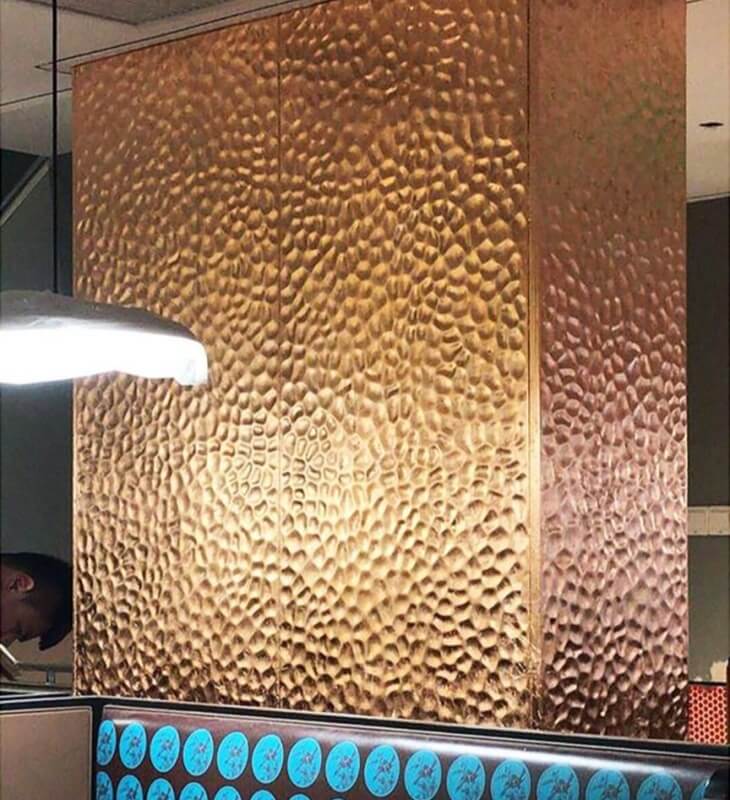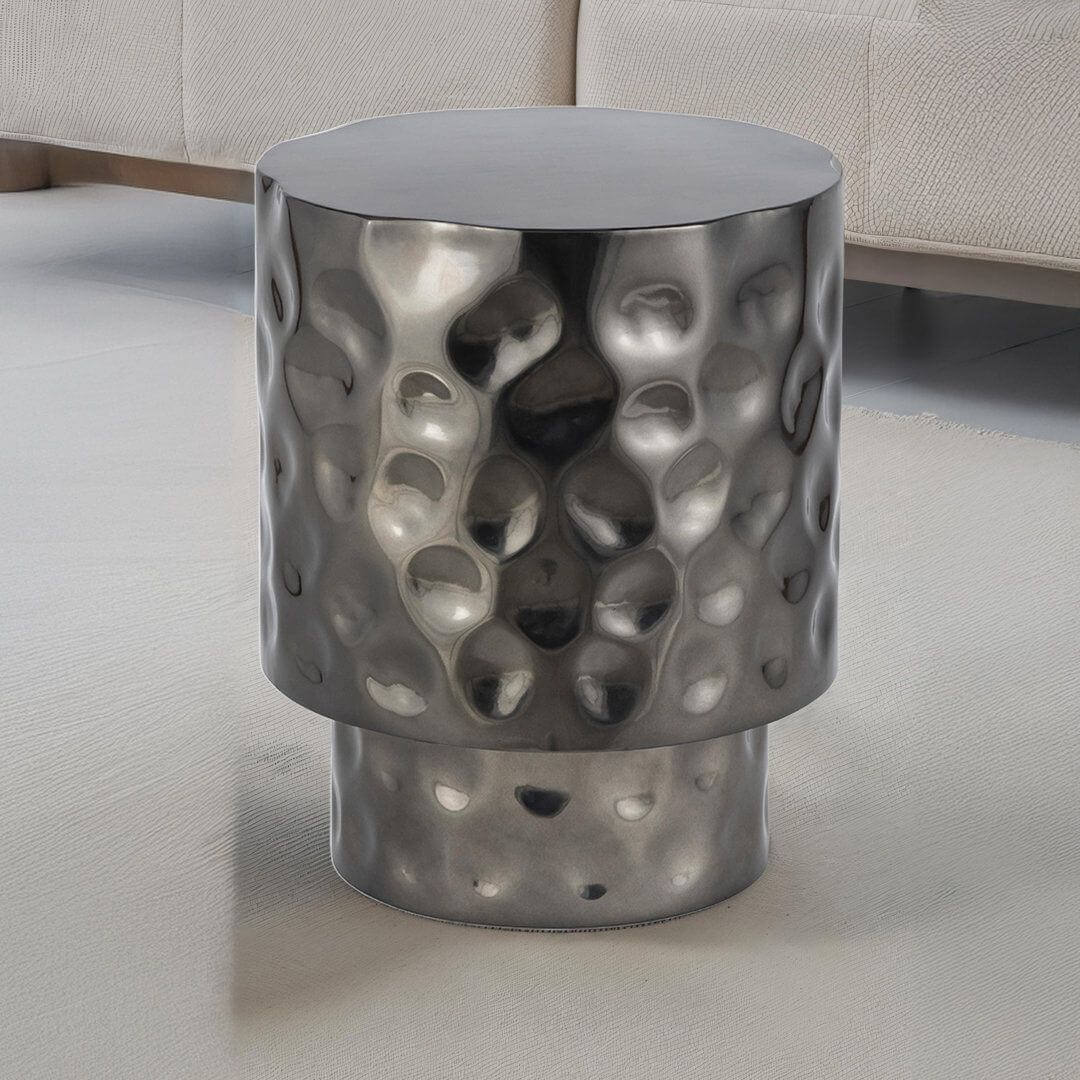
Hammer-textured stainless steel sheet is a type of metal sheet whose surface forms a unique texture through hammering. It not only retains the corrosion resistance and high strength of stainless steel, but also has a unique three-dimensional decorative effect and practical advantages.
The most eye-catching feature of stainless steel hammered sheets lies in their surface effect, which sets them apart from ordinary smooth stainless steel.
Its surface is dotted with irregular pits of various sizes and depths, resembling the marks left by hammering. This uneven texture will produce rich changes in light and shadow under the light, creating a unique diffuse reflection effect and avoiding the drawbacks of smooth stainless steel that are prone to leaving fingerprints and scratches.
The basic hammer-textured sheet retains the original color of stainless steel (silver), but more often, it will present a variety of colors such as champagne gold, rose gold, and bronze black through processes like PVD coating, electroplating or spraying.
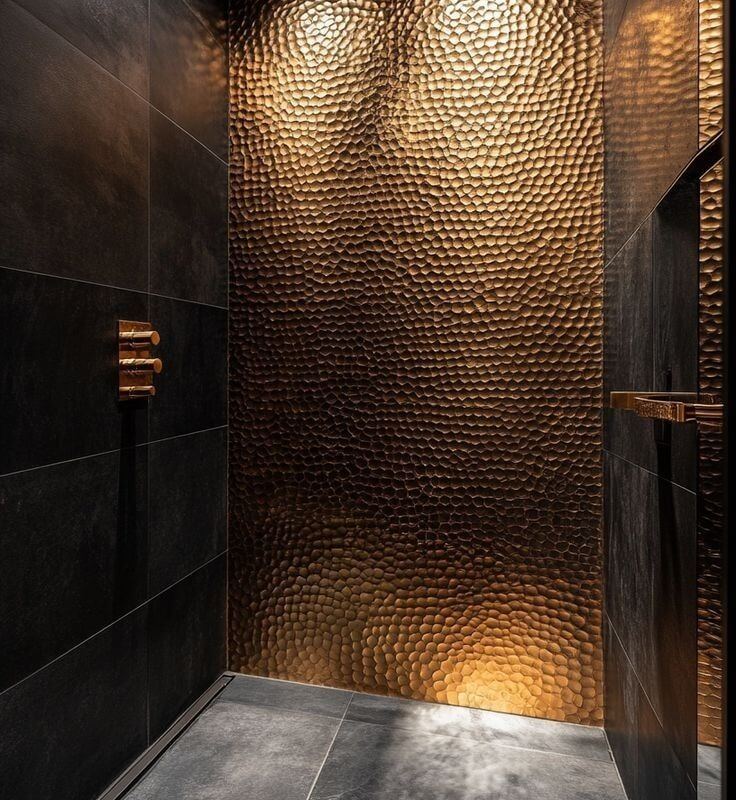
Hammering is a technique that uses tools such as hammers to shape or strengthen metal sheets through precise hammering. Modern mass production often employs mechanical embossing or rolling methods to efficiently replicate hammer marks. Hand hammering, on the other hand, pursues a unique artistic effect even more.
This is currently the most important method in large-scale production. By using specially designed rollers with hammer patterns on the surface, continuous embossing is carried out under high pressure on the surface of stainless steel sheets, thereby efficiently and consistently replicating the hammer effect. This method features high production efficiency, controllable and uniform patterns, and is suitable for large-scale project applications.
When it comes to traditional or the pursuit of ultimate artistic effects, it is hammered by hand using specially designed tools by artisans. The texture formed in this way is unique, natural and dynamic, full of irreplaceable artistic value. However, it is costly and inefficient, and is often seen in high-end custom artworks or luxury components.